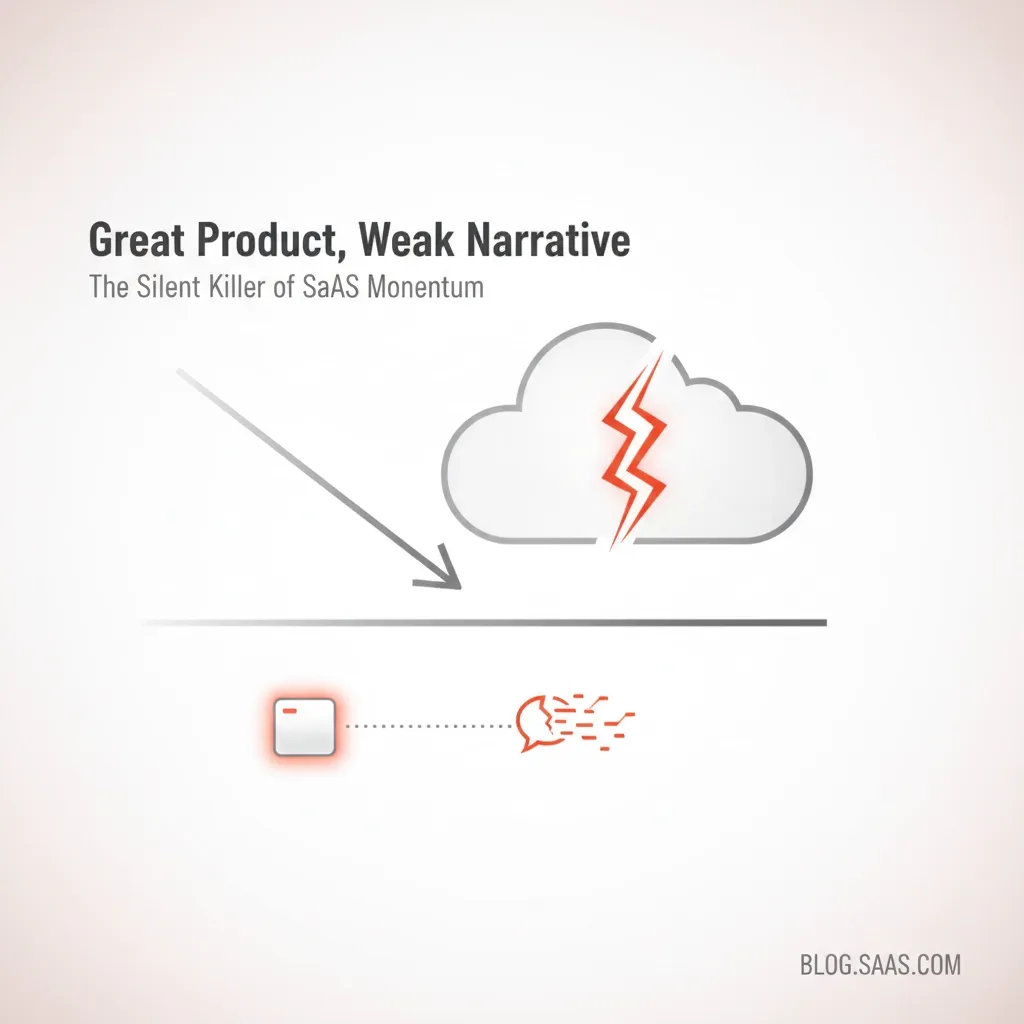
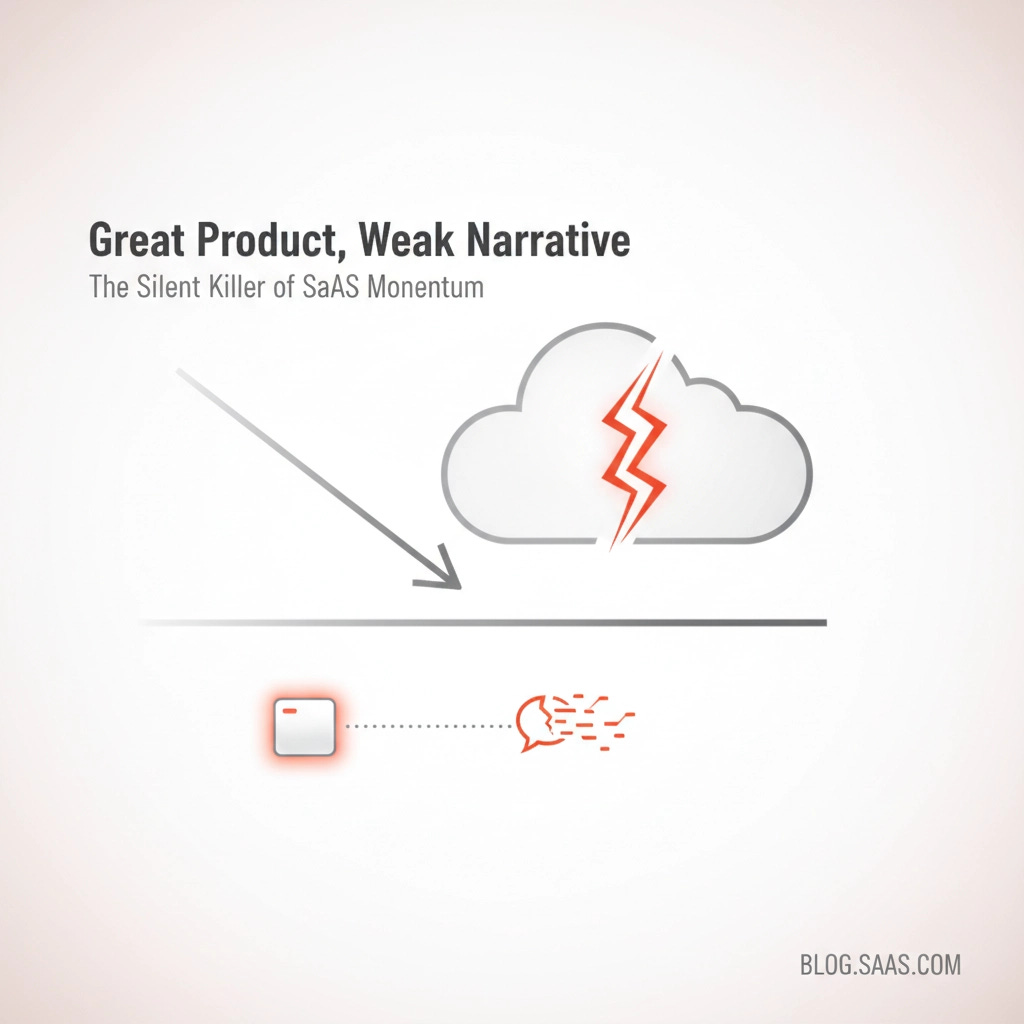
Your product is brilliant.
Your engineering team ships faster than your competitors can imitate.
Your architecture scales. Your security passes every audit.
And your revenue is still stuck.
Thanks for reading CLARITY HITS! Subscribe for free to receive new posts and support my work.
Here’s the uncomfortable truth: product excellence means nothing if you can’t tell the story that makes people care.
That gap between what you’ve built and how you talk about it is the silent killer of SaaS momentum. It’s ending more promising companies than bad code ever will.

That disconnect? It’s costing you millions.
Stories stick: facts don’t. When information gets packaged as a narrative, it becomes 22 times more memorable than standalone data points. Your feature list might be impressive, but it’s forgettable. Your customer’s transformation story? That lives in their head long after they close the tab.
Yet most SaaS companies treat storytelling like an afterthought. A marketing “nice-to-have.” Something to polish up after the product is perfect.
Wrong.
Your narrative isn’t decoration: it’s the foundation that everything else gets built on.
Why Great Products Fail Without Great Stories
Here’s what happens when brilliant products meet weak narratives:
You Attract the Wrong Customers
Without a clear story about who this is for and what it solves, you become a magnet for anyone with a vague pain point and a budget. These misaligned customers don’t understand your value prop. They struggle through onboarding. They churn fast.
Twenty-three percent of B2B customers cite poor onboarding as their reason for leaving within the first year. But here’s the kicker: most of those “poor onboarding” experiences start with a customer who never understood why they needed your product in the first place.
You Trigger the Churn Death Spiral
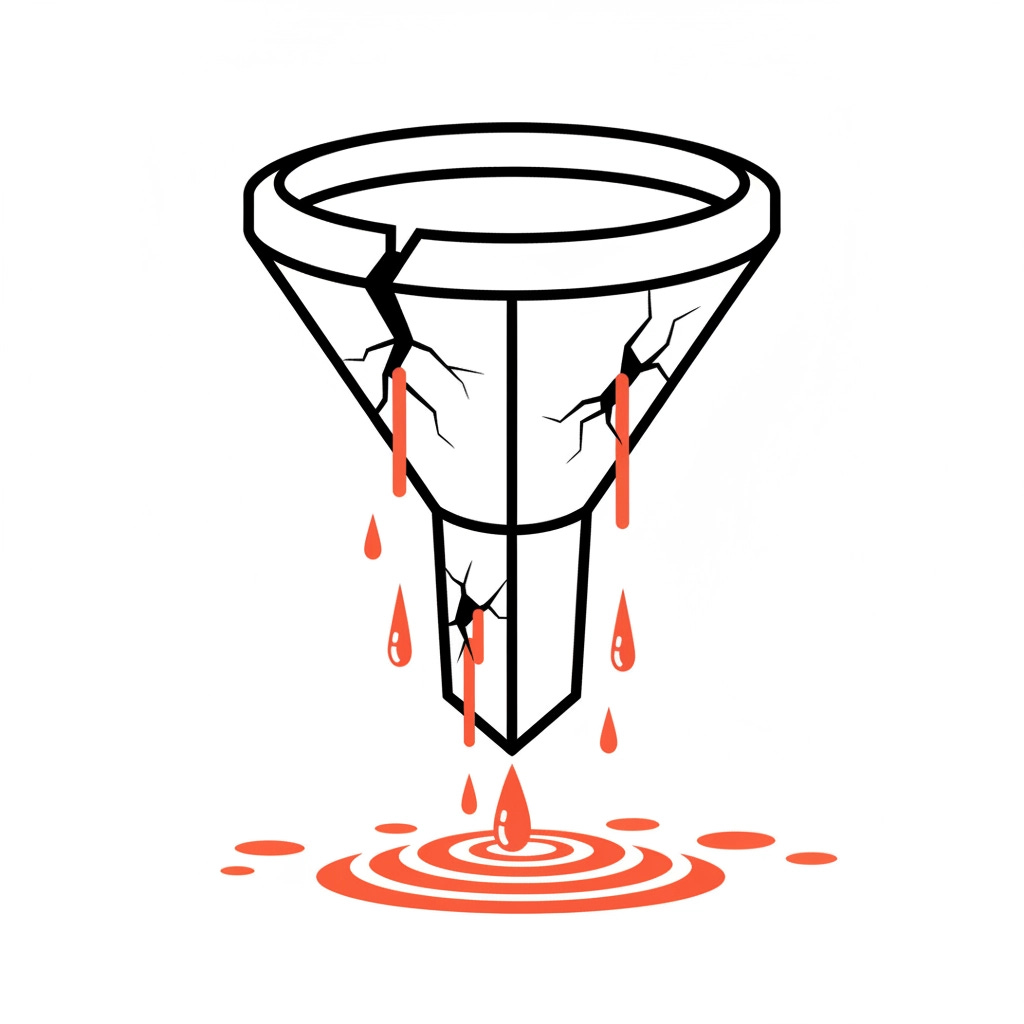
Bad-fit customers don’t just leave quietly. They leave frustrated. They write angry reviews. They tank your NPS scores. They poison your reputation with their network.
Now you’re stuck replacing churned revenue with more bad-fit prospects: because good prospects see those reviews and run. Your CAC goes up. Your LTV goes down. Your runway gets shorter.
All because you couldn’t tell the right story to the right people.
You Become Commoditized
In a crowded market, features become table stakes fast. Everyone has APIs. Everyone has integrations. Everyone claims to be “enterprise-ready.”
What they don’t all have? A compelling vision of the future they’re building toward.
Your narrative is the only renewable competitive advantage you have. It’s what transforms your product from a tool into a movement. From a vendor relationship into a partnership.
Strip away the story, and you’re just another SaaS platform competing on price.
The Anatomy of SaaS Stories That Sell
Effective SaaS narratives don’t happen by accident. They follow a structure: one that moves prospects from indifference to urgency to action.
Start With Their World, Not Yours
Great SaaS stories begin in the customer’s current reality. What does their Tuesday morning look like? What manual processes are eating their time? What keeps them up at night?
Paint that picture with surgical precision. Make them feel seen: not sold to.
Escalate the Stakes
What happens if nothing changes? What’s the cost of staying stuck?
This isn’t about fear-mongering. It’s about clarity. Most prospects live with pain because they’ve normalized it. Your job is to help them see what that normalization is actually costing them.

Position Your Product as the Bridge
Your SaaS isn’t the hero of this story: your customer is. Your product is the bridge that gets them from where they are to where they want to be.
Show them the transformation, not just the tool that enables it.
Paint the Future State
What does life look like after they implement your solution? How do their days change? What becomes possible that wasn’t before?
Quantify the gains where you can. But don’t ignore the qualitative outcomes: the relief, the confidence, the competitive edge they gain.
The Signal Through the Noise
Here’s where most SaaS companies get it wrong: they think narrative is about marketing copy.
It’s not.
Your narrative needs to live everywhere. In your onboarding flow. In your feature prioritization. In how your sales team positions value. In how your customer success team frames wins.
Every touchpoint should reinforce the same story about transformation.
Companies that nail this see 30% higher engagement rates. Their content gets shared more. Their sales cycles move faster. Their customers become advocates instead of just users.
Why? Because they’re not selling software: they’re selling a better version of their customers’ future.
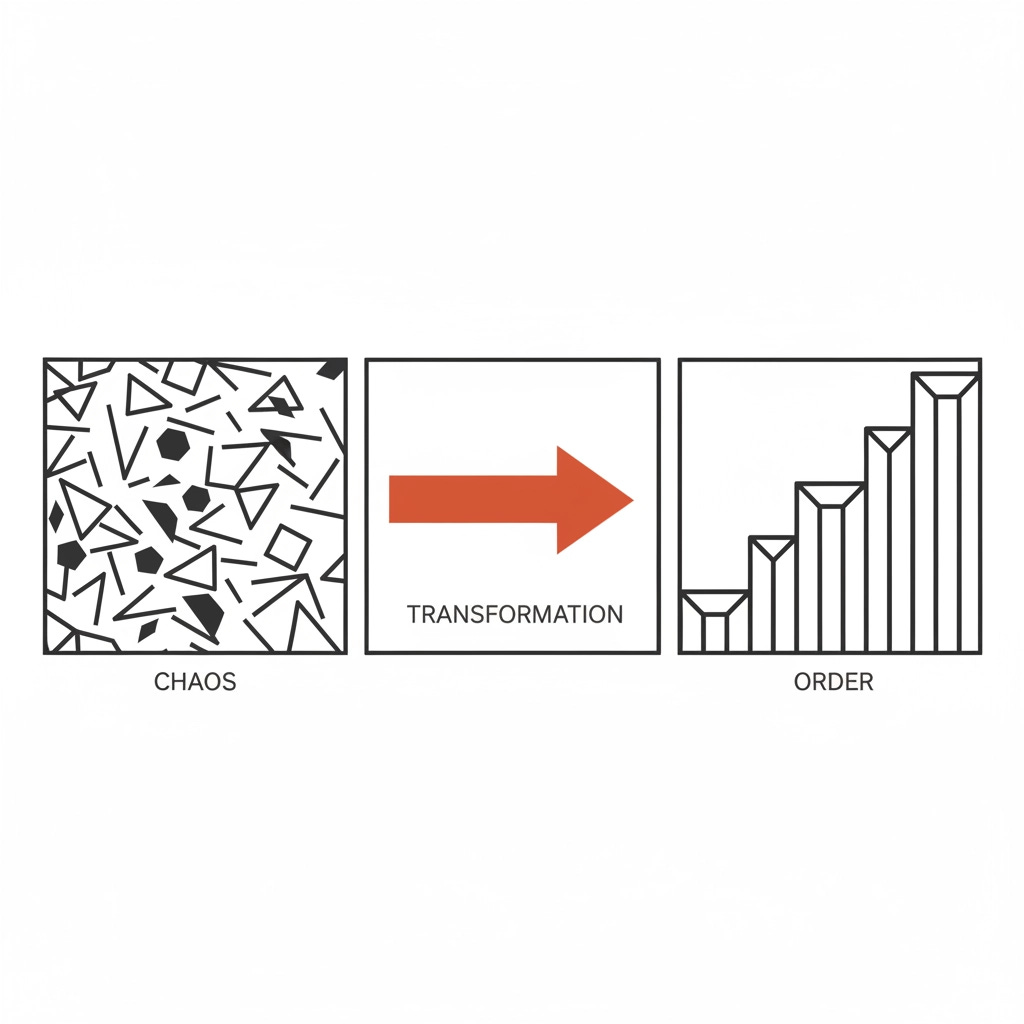
The Uncomfortable Truth About Excellence
You can build the most elegant, scalable, secure SaaS platform in your category.
You can have the best engineering team, the smartest investors, the most sophisticated technology stack.
None of it matters if you can’t articulate why any of it should matter to the people who need to buy it.
Excellence without narrative is just expensive overhead.
Your prospects don’t care how clean your code is. They care about how much cleaner their operations will be. They don’t care about your uptime metrics. They care about how much more productive their teams will be.
The gap between those two perspectives? That’s where momentum goes to die.

Stop Letting Great Products Die in Obscurity
Every day you spend perfecting features without perfecting your story is another day your competitors: with inferior products but superior narratives: steal market share you should own.
Your engineering team already solved the hard technical problems. Now solve the harder human problem: making people care enough to change.
Because in SaaS, the best product doesn’t always win.
The best story does.
Ready to bridge the gap between what you’ve built and how you talk about what you’ve built?